
Neurofeedback Therapy
Neurofeedback


Who can benefit from Neurofeedback?
Neurofeedback Therapy is suitable for people of almost any age, from young children to the elderly. Research indicates Neurofeedback is an effective therapy for conditions including (but not limited to) ADHD, anxiety (and anxiety-related disorders), and depression.
There is also evidence indicating that Neurofeedback can be helpful for people with (but not limited to) Autism, concussion, epilepsy, fibromyalgia, insomnia, optimal performance, PTSD (post-traumatic stress disorder) and TBI (Traumatic Brain Injury).
Neurofeedback at Perth Brain Centre
A typical neurofeedback program at Perth Brain Centre is designed to help you understand, retrain, and optimise your brain for lasting results.
Your first phase of neurofeedback training (Round 1) consists of 10 sessions. After this, we repeat your qEEG brain map to track your progress and fine-tune your program.
In Round 2, you’ll continue your neurofeedback training with an updated protocol, completing another 10 sessions. This is followed by a final qEEG brain map and review. This allows us to measure your improvements and ensure your results are supported long-term.
Most people complete around 40 sessions, depending on their individual goals and how their brain responds to training.

What is Neurofeedback?
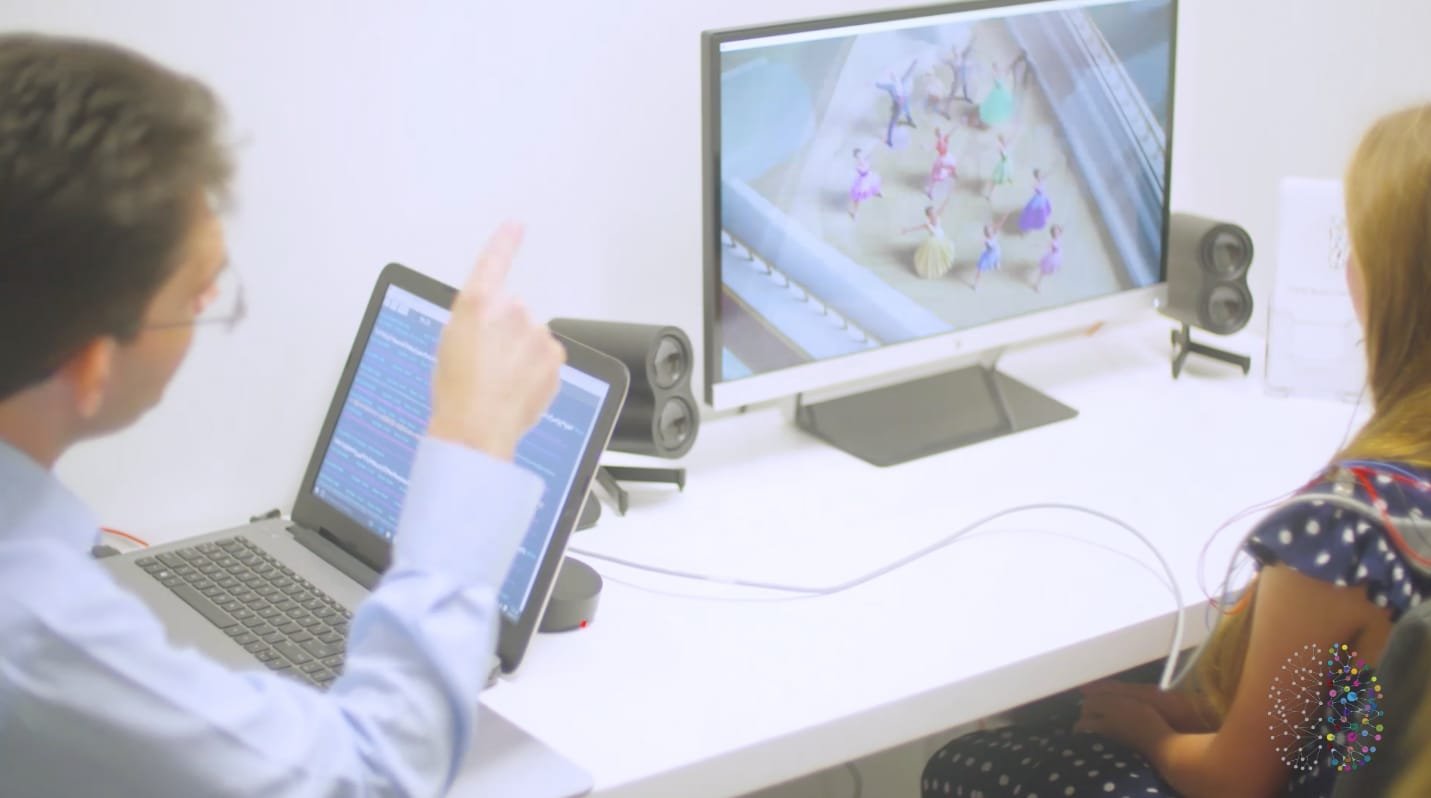
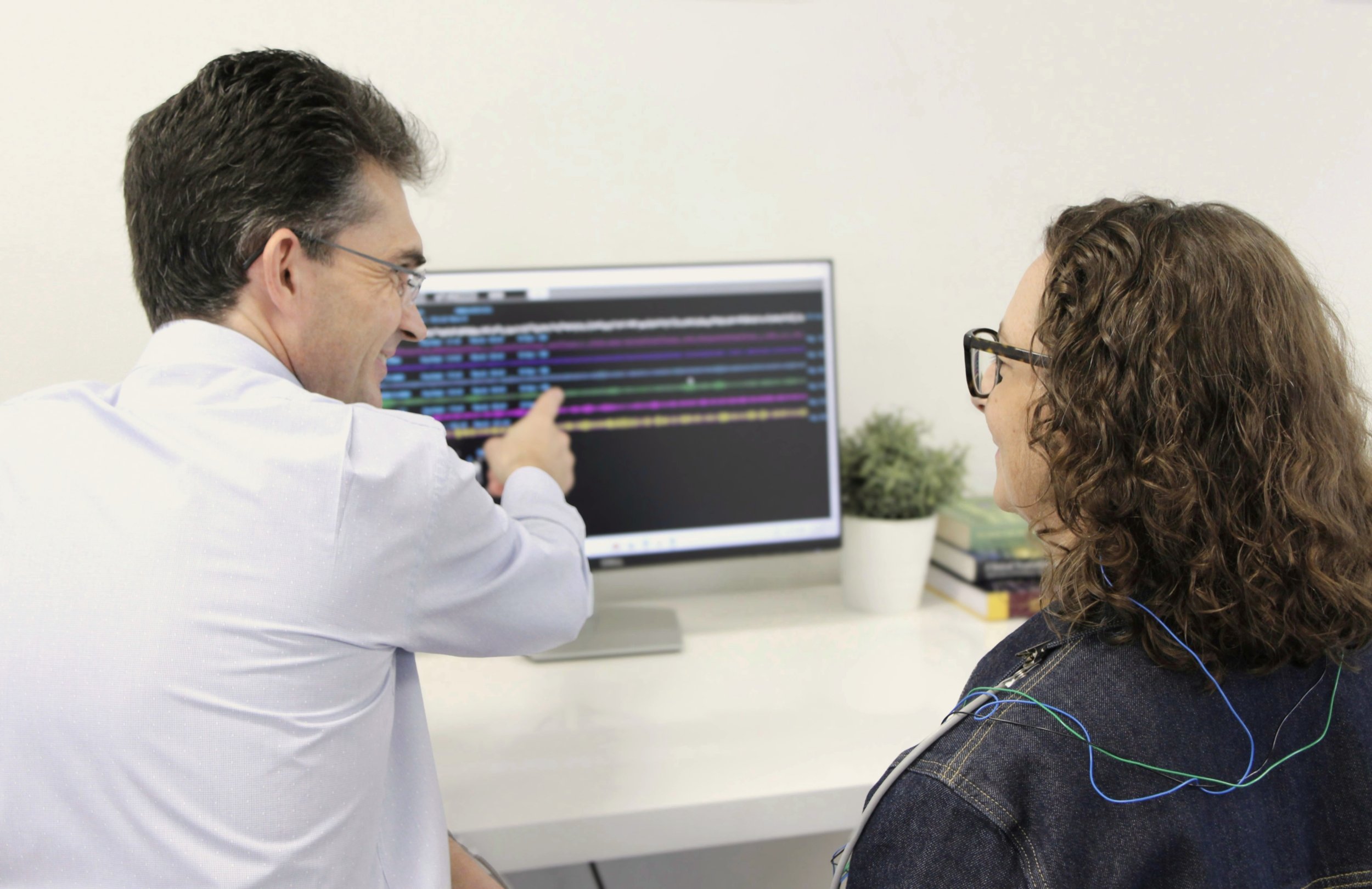
Neurofeedback, also known as EEG Biofeedback, is a brain-based therapy that uses a sophisticated brain-computer interface to “strengthen” or “rewire” the brain by training brainwaves, the tiny electrical signals naturally produced by the brain.
Neurofeedback at Perth Brain Centre is guided by information from special brain scans known as QEEG (Quantitative Electro-Encephalogram). The information from these scans allows for more personalised therapy and better results.

Who can benefit from Biofeedback Training?
NASA, the United States Military, and many top Olympic sports teams have been using Biofeedback Training for years to improve performance. Research shows that Biofeedback Training can also be an effective treatment for a range of conditions, including (but not limited to) anxiety and anxiety-related disorders (including PTSD), chronic pain, depression, Fibromyalgia and headaches.
Biofeedback at Perth Brain Centre
Initially, special sensors are needed to detect small signals from the body, such as body temperature, breathing, circulation, heart function, muscle tension and sweat responses. Specialised hardware and software provide real-time feedback, and with one-to-one training, people can learn to gain greater awareness and control. Over time, and with regular practice over a few weeks, long-term improvements can be maintained without needing to use sensors or equipment.
What is Biofeedback Training?
Whilst Biofeedback Training is used to help a wide range of problems, it is most commonly used to help people gain control over their stress responses. It is normal for your brain and body to respond to stress, whether it is to increase your blood pressure as you stand up so you don’t faint, or to speed up your mind a little so you perform better in a test.
Normally, these automatic responses to stress actually help people to function better, but sometimes these stress responses can become exaggerated or out of sync and can result in people “freezing” under pressure, or can make it hard to “switch off” and relax. Biofeedback Training can help people gain control over these unhelpful responses to stress and get the brain and body working better to improve performance.


Who can benefit from tDCS?
Research indicates that tDCS is an effective therapy for depression and there is evidence it can also help people with other conditions including, but not limited to: addiction, Alzheimer’s disease, chronic pain, epilepsy, fibromyalgia, migraine, Motor Neurone Disease, Parkinson’s Disease, Schizophrenia and stroke.
What is tDCS?
Trans-Cranial Direct Current Stimulation (tDCS) is a type of Non-Invasive Brain Stimulation (NIBS) therapy that uses a small electric current to stimulate the brain. During treatment, people sit comfortably whilst small sponge electrodes are positioned over targeted areas of the brain. The electrodes are held in place using soft straps and deliver a low-intensity direct electric current to the underlying brain.
Treatment is safe, with most people simply feeling a mild “tingling” or “itching” sensation during the session. People will sometimes perform specific activities or exercises after each treatment session.

